Are Ventless Garage Heaters Safe?
For a closed garage you spend time in, a vented or electric heater is the safer choice. A ventless heater burns gas or propane and releases everything it makes, including carbon monoxide and water vapor, into the space you are standing in. A vented heater sends those outside.
If you still plan to use one, the steps below cover fresh air, CO alarms and local rules.
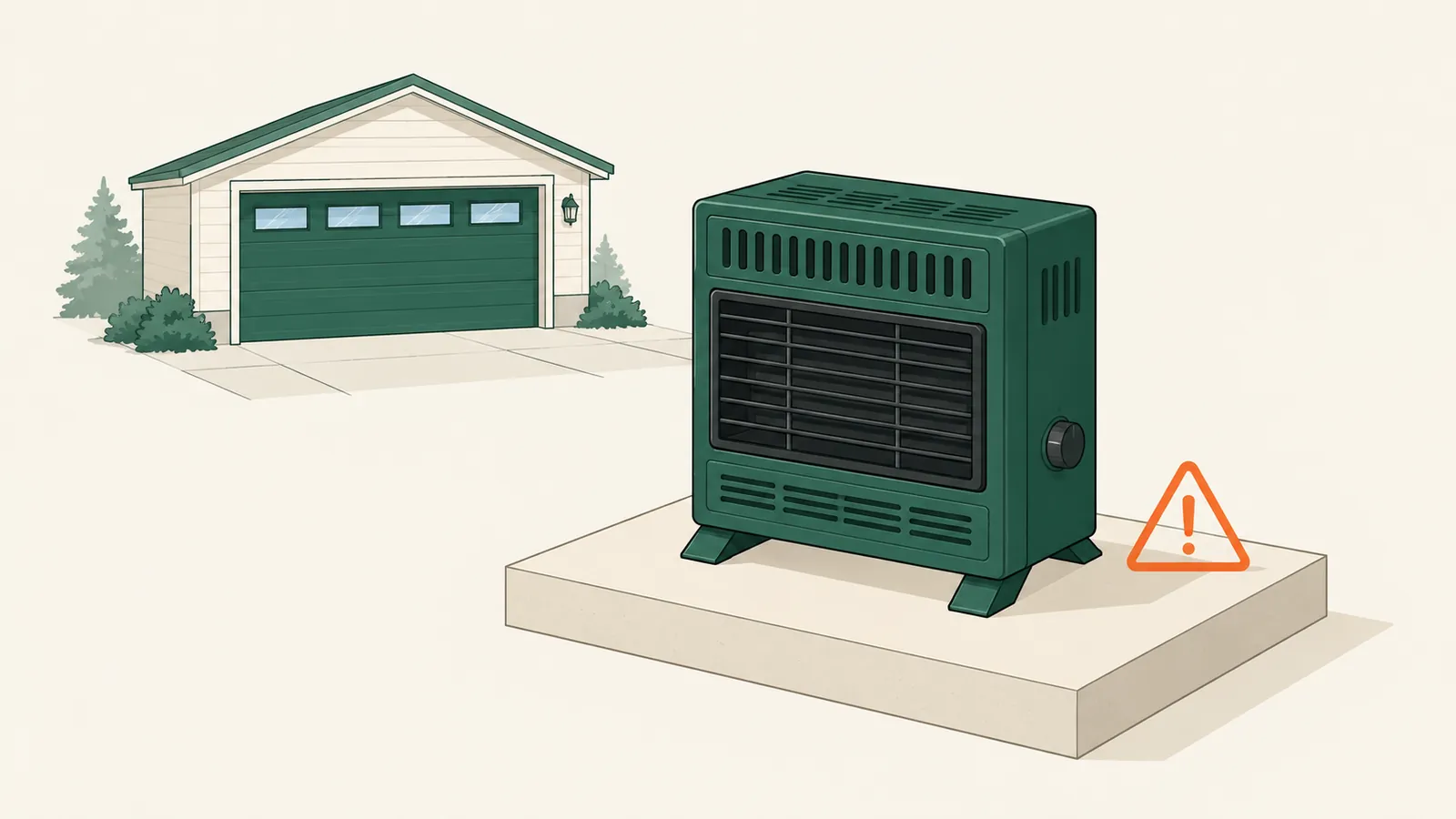
What a ventless garage heater is
A ventless heater, also sold as vent-free or unvented, burns natural gas or propane and has no flue or exhaust pipe. All of the heat stays in the room. So does everything else the flame produces.
That is the whole appeal and the whole problem. No vent means no hole in the wall and a lower price to install. It also means the garage air is the only place the exhaust can go.
The risks in a closed garage
Combustion gases. The EPA lists unvented kerosene and gas space heaters as sources of indoor combustion pollution and names the main pollutants: carbon monoxide, nitrogen dioxide and particles. Carbon monoxide has no color or smell, so you will not notice it building up.
Know the warning signs. CPSC lists the symptoms of carbon monoxide poisoning as headache, dizziness, weakness, nausea, vomiting, sleepiness and confusion. If you suspect carbon monoxide poisoning, get everyone outside into fresh air right away, then call 911. Do not stay behind to turn off or check the heater.
Moisture. Burning gas makes water. Ventless appliances release a significant amount of water vapor into the space, according to the Building America Solution Center, a Department of Energy resource. In a cold garage that moisture lands on walls, windows, tools and cars.
Fuel vapors. Garages hold gasoline, solvents and paint. The model residential code (IRC G2408.2) requires the ignition source of a gas appliance in a private garage to sit at least 18 inches above the floor, unless the appliance is listed as flammable-vapor-ignition resistant.
If you use one anyway
- Follow the heater's manual for minimum room size and fresh-air openings. Those limits are part of how the heater was tested.
- Install CO alarms. CPSC recommends battery-operated alarms or alarms with battery backup on every level of the home and outside sleeping areas. Follow each alarm's instructions on where it can go; many household models are not rated for a garage.
- Keep anything that can burn at least 3 feet away from the heater, as the U.S. Fire Administration advises for all heaters.
- Keep the ignition source at least 18 inches above the floor unless the heater is listed as flammable-vapor-ignition resistant (IRC G2408.2).
- Never run it while you sleep in the space or with the garage sealed tight, and turn it off when you leave.
- Have a qualified installer connect fixed gas or propane lines.
Check your local rules first
Because of safety concerns, several states and municipalities have banned ventless combustion appliances, according to the Building America Solution Center. CPSC's advice is simple: do not use unvented gas space heaters where local codes prohibit them.
Rules can also depend on the room, the fuel and the heater's listing. Call your local building or fire department before you buy, and read the listing on the product itself. Your homeowner's insurer may have its own view.
Vented heater sizes for common garages
The table shows what a vented heater needs to deliver for three common garages. Gas sizes are input ratings at 80% efficiency. A ventless heater sized the same way still releases all of its combustion products into the garage, so a correct size does not change the air quality question.
| Garage | Heat needed | Vented gas or propane | Electric |
|---|---|---|---|
| 1-car, 12 × 20 ft | 10,000 BTU/hr | 30,000 BTU/hr input | 4,000 W |
| 2-car, 24 × 24 ft | 24,500 BTU/hr | 45,000 BTU/hr input | 7,500 W |
| 3-car, 32 × 24 ft | 32,500 BTU/hr | 45,000 BTU/hr input | 10,000 W |
Vented and electric alternatives
Vented propane. A propane unit heater with a vent kit runs from a tank like any propane heater and sends its exhaust outside. The propane garage heater guide covers sizing and tank run time.
Vented natural gas. If gas is already near the garage, a vented unit heater is the cheapest heat to run. See the natural gas garage heater guide for venting and gas line work.
Electric. An electric heater makes no combustion gases at all. Our default 2-car garage needs about 7,200 W, which one 240 V unit can cover. The electric garage heater guide explains circuits and cost.
Not sure which way to go? The best way to heat a garage guide ranks every option for your garage by cost per winter.
Questions about ventless heaters
Are ventless garage heaters safe?
They are less safe than a vented or electric heater, because every combustion product stays in the garage. If you use one, it has to be a model listed for that kind of space, with the room size and fresh air its manual requires, working CO alarms in the home, and nothing that can burn nearby. Some places do not allow them at all.
Do ventless heaters need a CO detector?
Yes. CPSC recommends battery-operated CO alarms, or alarms with battery backup, on every level of the home and outside sleeping areas. Put one in the house near the door to an attached garage. Many household alarms are not meant for garages, where cold, dust and exhaust can affect them, so check the alarm's instructions and choose one rated for the space if you want monitoring in the garage itself.
Are ventless heaters legal in my state?
Rules differ from place to place. Several states and municipalities have banned ventless combustion appliances, and CPSC advises against using unvented gas space heaters where local codes prohibit them. Check with your local building or fire department and read the heater's listing before you buy.
Do ventless heaters cause condensation in a garage?
They can. Burning gas or propane makes water vapor, and a ventless heater releases it into the garage. On cold walls, windows and metal doors that moisture can condense, which is hard on tools and car finishes. A vented heater sends the moisture outside with the exhaust.
What size ventless heater do I need for a garage?
Size it the same way as any other heater, by the garage's heat loss. A 24 × 24 ft garage at average insulation and a 40°F rise needs about 24,500 BTU/hr. A bigger heater is not safer. It burns more fuel and puts more combustion products into the air. Size yours with the garage heater calculator.
Sources
Checked October 1, 2026. Page dates are the publisher's own.
- EPA, Sources of Combustion Products (Dec 17, 2025)
- PNNL Building America Solution Center, Unvented Combustion Appliances (undated)
- CPSC, Carbon Monoxide Information Center (undated)
- CPSC, Warns of Hazards from Furnaces, Space Heaters and Fireplaces (Dec 14, 2005)
- UpCodes, IRC 2024 Chapter 24 (G2408.2) (2024 IRC)
- USFA, Heating fire safety (undated)